
Buy a cold tub: ice barrel & plunge bath
Cold tubs, ice barrels & plunge pools for your garden
Imagine this: After an intense workout, a demanding workday, or simply as a regular part of your health routine – you immerse yourself in refreshing, cool water.
The cold invigorates your body, sharpens your mind and activates your self-healing powers.
What was reserved for professional athletes and wellness enthusiasts just a few years ago can now be experienced in your own garden at any time.
Cold tubs , ice barrels and plunge pools make the health benefits of cold therapy available in your home – without time-consuming trips to public facilities or expensive spa visits.
Whether you want to optimize your athletic recovery, strengthen your immune system, or simply appreciate the mental clarity that a cold bath provides: A cold tub in your own garden offers you this opportunity every day.
As a specialist retailer for premium wellness products, we at Wellnessfuerdraussen.de understand the growing importance of cold applications for health and well-being.
We offer a carefully selected product range – from classic wooden ice barrels to modern cold plunge pools with active cooling, and compact plunge pools. High-quality materials, well-designed functionality, and personal consultation are a matter of course for us.
Discover on this page the benefits of cold tubs, the different types available, and what to consider when choosing one. We'll guide you on your way to creating your own personal cold therapy oasis in your garden.
2. What is a cold tub?
A cold tub is a specially designed cold water basin for private use that allows for the targeted application of cold therapy.
Unlike a traditional ice bath, where you simply add ice cubes to a bathtub, a cold tub offers a permanent, comfortable, and hygienic solution for regular cold therapy. The water temperature typically ranges between 8°C and 15°C – precisely the range in which the health benefits of cold therapy are most pronounced.
Function and technology
Cold tubs operate according to two basic principles: passive cooling or active cooling .
For passively cooled models – usually classic wooden ice buckets – you use ice cubes, ice packs, or the natural ambient temperature to cool the water. This option is particularly effective in the colder months and requires no additional technology.
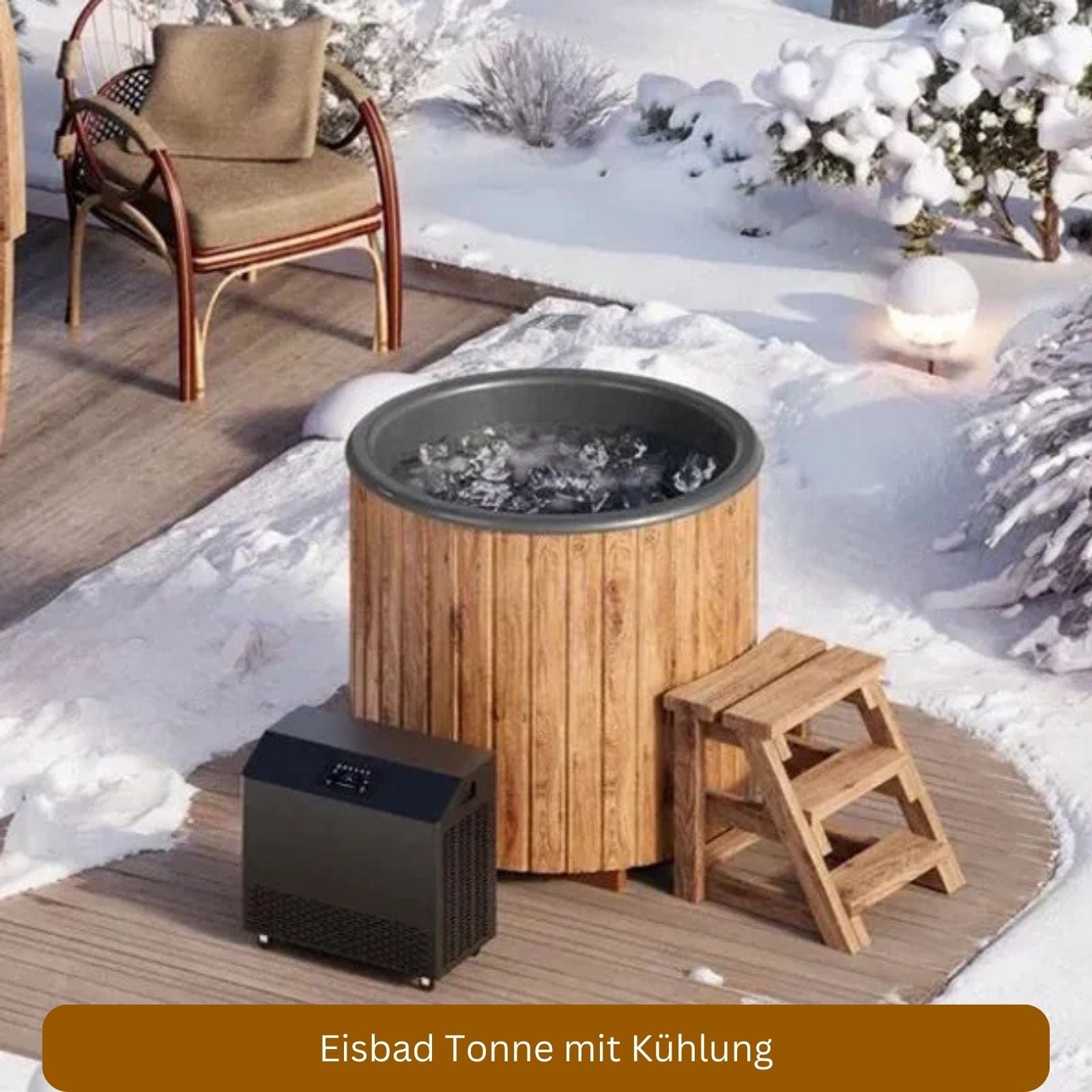
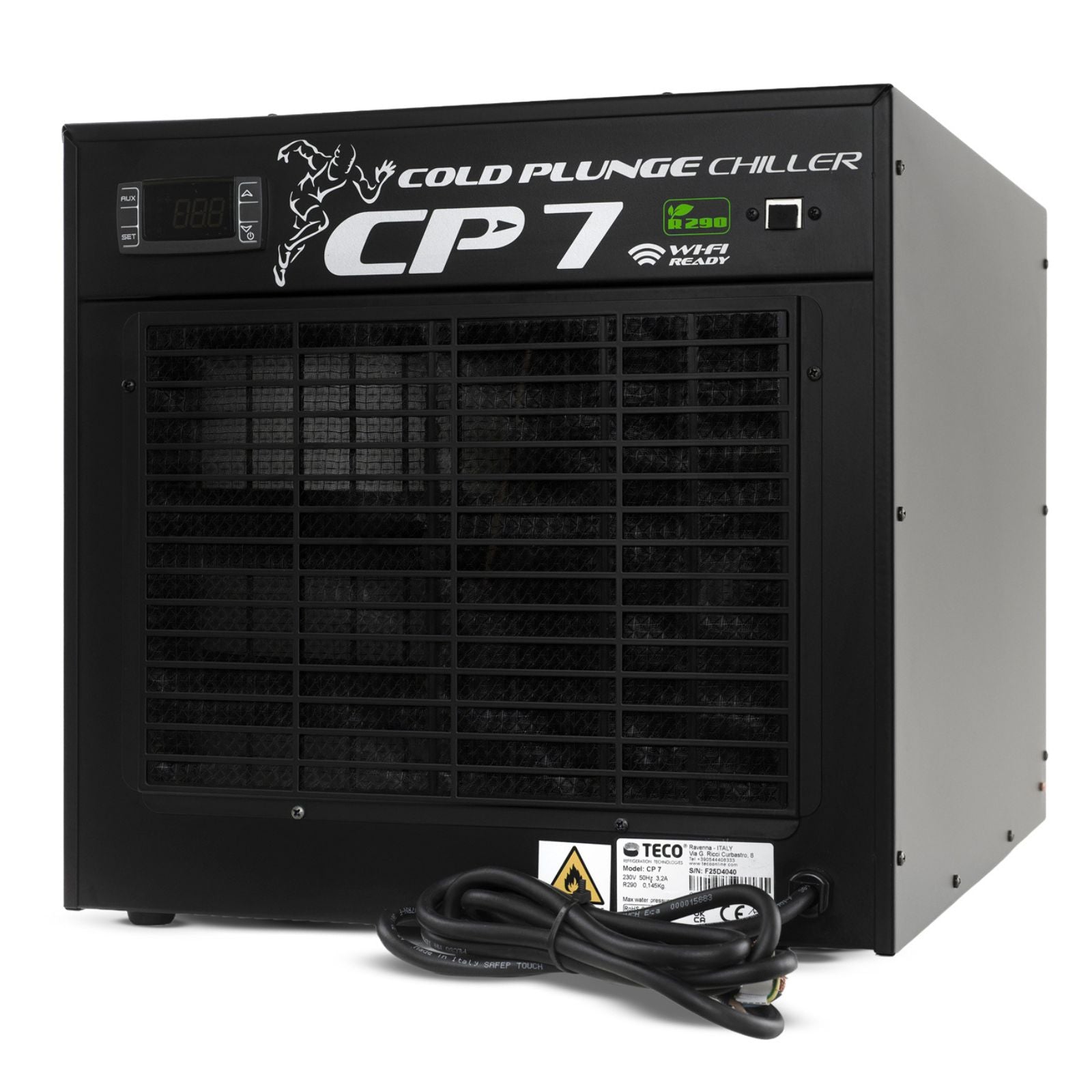
Modern cold plunge pools with active cooling, on the other hand, feature integrated cooling systems and water filters, similar to an inverted hot tub. A compressor continuously cools the water to the desired temperature, regardless of the outside conditions. These systems offer consistent temperatures and maximum comfort year-round – even in summer when passive cooling reaches its limits.
Materials and construction
The choice of material for cold tubs not only affects the appearance, but also the durability, insulation and ease of maintenance:
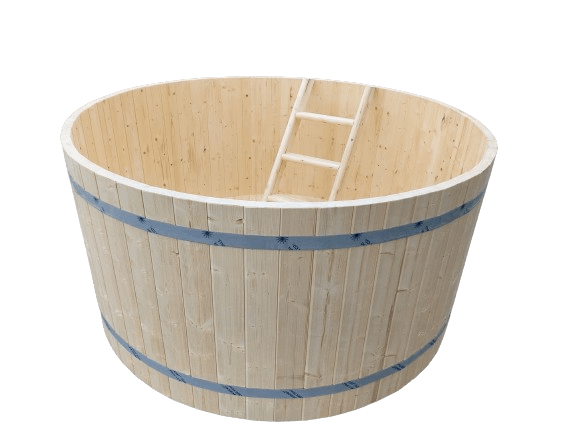
Wooden ice buckets are typically made of Nordic spruce, thermally modified wood, or robust larch. They impress with their natural, authentic look and blend harmoniously into any garden setting. The wood is either untreated or thermally modified, making it particularly resistant to moisture. The natural material structure provides insulation, keeping the ice inside the bucket cold for longer.
Stainless steel models impress with their durability, hygienic surface, and modern aesthetics. They are particularly easy to clean, do not rust, and are ideally suited for actively cooled systems. The smooth surface makes cleaning considerably easier.
GRP (glass fiber reinforced plastic) pools offer good insulation, are lightweight yet stable. They allow for a variety of shapes and sizes and are frequently used in modern cold plunge pools.
Differentiation from other products
A cold tub differs fundamentally from a hot tub or whirlpool: while the latter focus on warmth, relaxation, and massage, a cold tub aims for the invigorating and regenerative effects of cold. The water temperature is the crucial distinguishing feature – instead of 37°C to 40°C in a hot tub, it is a cool 8°C to 15°C in a cold tub.
A cold tub also differs significantly from a conventional rain barrel or pool: it is specifically designed for short, intensive cold applications – not for extended immersion or swimming. The seat height, entry aids, and compact design are geared towards full-body immersion for just a few minutes. High-quality models also feature filter systems that keep the water clean and hygienic without the need for daily water changes.
The clear purpose makes the cold tub an efficient wellness tool for people who want to use the benefits of cold therapy in a targeted and regular way – be it for regeneration after sports, to strengthen the immune system or for mental toughening.
3. The advantages of cold tubs: More than just a trend
The growing popularity of cold tubs is not a short-lived wellness trend, but is based on scientifically proven health benefits.
Regular cold therapy activates the body's own mechanisms that can sustainably improve your health, performance, and mental strength. What professional athletes and health-conscious individuals have been practicing for years is increasingly becoming an integral part of a modern, health-oriented lifestyle.
Physical regeneration and health
Direct contact with cold water triggers a variety of physiological reactions that benefit your body:
Accelerated recovery after exercise – After intense training, deliberately expose your body to a cold stimulus. The low water temperatures between 8°C and 15°C reduce inflammatory reactions in the muscles and lessen muscle soreness. The cold constricts the blood vessels, thus reducing swelling.
As soon as you get out of the cold tub, the blood vessels dilate again and fresh, oxygen-rich blood flows into the stressed muscles – a natural regeneration boost that many athletes appreciate.
Strengthening the immune system – Regular cold applications train your immune system. The cold shock activates the production of white blood cells and stimulates the release of adrenaline and noradrenaline. Studies show that people who regularly take cold baths suffer less frequently from colds and infections.
Your body becomes more resistant to pathogens and can react better to stressful situations.
Improved blood circulation – The interaction between the cold stimulus and the subsequent warming phase trains your blood vessels. The vessels constrict and dilate again – a natural vascular exercise that improves blood circulation in the long term. This can have a positive effect on your blood pressure and promote cardiovascular health.
Reduction of inflammation – Chronic, low-grade inflammation in the body is associated with numerous lifestyle diseases. Cold therapy has an anti-inflammatory effect and, with regular use, can help reduce inflammatory processes in the body.
People with rheumatic complaints or joint problems often report a relief of their symptoms.
Metabolism activation – Cold water forces your body to produce heat. This activates brown adipose tissue, which burns calories to generate heat. This process – known as thermogenesis – boosts your metabolism and can contribute to long-term weight management.
Furthermore, insulin sensitivity improves, which can have a positive effect on your blood sugar levels.
Mental strength and well-being
The benefits of a cold tub are not limited to the physical sphere – your mental health also benefits considerably:
Stress reduction and emotional balance – consciously stepping into cold water requires overcoming your fear. But it is precisely this overcoming of fear that trains your mental resilience. Controlled cold stress has been proven to lower cortisol levels – your body learns to cope better with stressful situations.
Many users report a feeling of clarity and inner peace after ice bathing. The initial tension gives way to deep relaxation – a reset for body and mind.
Building mental resilience – Regular cold exposure is a form of mental training. You learn to endure unpleasant situations and consciously control them.
This ability transfers to other areas of life: you become more resilient, can cope better with challenges, and develop more self-confidence. Knowing that you can handle the cold strengthens your self-esteem in a lasting way.
Improved sleep quality – A cold tub in the evening can significantly improve your sleep quality. After the cold application, your body warms up again, triggering a natural drowsiness effect.
The relaxation that sets in after the initial stress optimally prepares you for restful sleep. Many users report that they sleep more deeply and for longer periods.
Increased mental clarity and concentration – The cold stimulus acts like a wake-up call for your mind. The release of adrenaline and endorphins makes you alert, focused, and energized.
For many, a quick bath in the morning replaces coffee – they start the day clear-headed and focused. The increased blood flow also provides your brain with better oxygen and nutrients.
Positive mood through endorphin release – After overcoming the initial discomfort and during the warm-up phase, your body releases endorphins – the body's own feel-good hormones. This natural "high" promotes a good mood and a feeling of contentment. Regular cold tub users report an overall more positive mood and greater enjoyment of life.
Integration into your everyday wellness routine
A cold tub in your own garden offers you the flexibility to use cold therapy exactly when you need it:
Time efficiency – no travel, no opening hours, no waiting times. You decide when you want to take a dip. Whether in the morning for an energizing start to the day, at midday for a refreshing break, or in the evening for recovery after a workout – your cold tub is ready. Just 2 to 5 minutes are enough to feel the positive effects.
Combination with sauna – The classic combination of heat and cold enhances the health benefits of both. If you already own a sauna or are planning to purchase one, a cold tub is the ideal addition. Alternating between a hot sauna and a cold plunge provides an intensive workout for your cardiovascular system, strengthens your immune system, and creates an unparalleled feeling of well-being. Many of our customers combine a barrel sauna and an ice tub to create a complete wellness oasis in their own garden.
Year-round availability – Unlike public facilities, your cold tub is available to you all year round. While passive systems are particularly effective in the cooler months, actively cooled cold plunge pools guarantee consistent temperatures even in summer. This allows you to maintain your routine throughout the year and continuously enjoy the benefits.
Privacy and hygiene – Only you and your invited guests will bathe in your private cold tub. You don't need to worry about hygiene and can fully concentrate on your experience. You control the water quality; modern filtration systems keep the water clean and clear.
Routine and consistency – the most lasting benefits come from regularity. A cold tub in your own garden makes it easy to establish a consistent routine. What initially requires some effort quickly becomes a cherished ritual – a fixed part of your day that you look forward to.
---
Important NOTE:
The health benefits mentioned refer to regular use by healthy adults. If you have existing cardiovascular disease, high blood pressure, a cold, or other health conditions, we strongly recommend consulting your doctor before using a cold tub. Cold therapy is not suitable for everyone.
4. Cold Tub Types: Which model suits you?
Choosing the right cold tub depends on your individual needs, budget, and local conditions. Each type has its specific advantages and is suitable for different applications. We'll introduce you to the three main categories to help you make an informed decision.
Classic wooden ice cream tubs
Wooden ice barrels are the traditional and most authentic form of cold tub. They impress with their natural aesthetic and blend harmoniously into any garden setting – whether rustic and natural or modern and minimalist.
Function and materials – These models are typically made of Nordic spruce, thermally treated wood, or robust larch. The staves (individual wooden planks) are joined together like a traditional wine barrel and secured with stainless steel hoops. When filled, the wood swells, completely sealing the barrel – entirely without chemicals or plastic seals. The natural material structure acts as insulation, keeping the cold inside for longer.
Cooling – Wooden ice buckets use passive cooling. They utilize the natural ambient temperature, ice cubes, or ice packs to bring the water to the desired temperature. In the autumn and winter months, the ambient temperature is often sufficient to keep the water consistently cool. In spring and summer, you can add ice as needed. This method requires no electricity and is particularly sustainable.
Sizes and capacities – Ice kegs come in various sizes – from compact models for one person (around 500-700 liters) to generous versions for two or more people (1,000-1,500 liters). The typical keg height is 100-120 cm, allowing you to comfortably immerse yourself up to your shoulder.
Who are they suitable for? – Wooden ice buckets are ideal for you if you:
- Appreciate the natural, authentic look and value sustainable materials
- Primarily want to bathe in the cooler months or are willing to add ice in the summer
- Do not want a permanent power supply in the garden or want to minimize energy costs
- Want to create a harmonious overall picture with your garden sauna or hot tub
- Appreciate the traditional charm of a wooden barrel and be able to commit to regular, but uncomplicated, maintenance.
Care – Wooden ice buckets require some attention: The wood should not dry out, so it is recommended to keep the bucket permanently filled with water. Regular water changes (every 1-2 weeks, depending on usage) keep the water fresh. The wood can occasionally be treated with natural oils to increase its longevity.
Cold plunge pools with active cooling
Cold plunge pools with integrated cooling systems represent the modern, technically sophisticated version of the cold tub. They offer maximum comfort and consistent conditions year-round – regardless of the season or outside temperature.
Function and Technology – These systems have a built-in compressor that continuously cools the water to the desired temperature – typically between 3°C and 15°C, depending on the setting. Similar to a refrigerator, heat is extracted from the water and released to the outside. In addition, most models are equipped with high-performance filter systems and UV-C disinfection, which keep the water consistently clean and hygienic. You don't need to change the water regularly – a significant advantage in terms of convenience and water consumption.
Materials – Cold plunge pools are usually made of stainless steel, GRP (glass fiber reinforced plastic), or high-quality composite materials. Stainless steel scores points with its durability, hygienic surface, and modern look. GRP pools offer excellent insulation properties and allow for a wide variety of shapes and designs. Both materials are extremely easy to maintain and weather-resistant.
Control and comfort – Modern cold plunge pools can often be controlled via app or touchscreen. You can precisely set the target temperature, program filter cycles, and monitor energy consumption. Some premium models offer additional features such as LED lighting, ozone disinfection, or integrated entry ladders.
Sizes and setup – Sizes vary from compact single models (from 600 liters) to spacious pools for several people (up to 2,000 liters). Most models are freestanding and can be set up on a level, load-bearing surface – patio, garden, or even covered areas. Some models are also designed for indoor use.
Who is it suitable for? – Cold plunge pools with active cooling are the right choice for you if you:
- Desiring constant water temperatures throughout the year, even in the height of summer
- Appreciate maximum comfort and minimal maintenance
- Want to make a long-term investment in your health
- Use a cold tub several times a week or daily and pay attention to hygiene.
- Are prepared to invest in high-quality technology and have a power supply
- Prefer a modern, design-oriented look
Operating costs – Active cooling requires electricity. Consumption depends on the outside temperature, frequency of use, and insulation. On average, you can expect monthly electricity costs between €30 and €80 – comparable to a refrigerator or significantly cheaper than the regular costs of spa visits or buying ice.
Immersion baths and compact ice tubs
Plunge pools are the space-saving, flexible alternative to traditional cold tubs. They are particularly suitable for smaller gardens, patios, or even indoor use in basements or garages.
Construction and materials – Compact immersion baths are often made of reinforced plastic, fiberglass, or lightweight stainless steel. Their design prioritizes portability and ease of use. Some models are even foldable or collapsible, allowing for easy storage or transport. Capacity typically ranges from 200 to 600 liters – sufficient for one person immersing themselves upright or sitting.
Cooling – Most compact immersion baths use passive cooling with ice cubes or ice packs. Some higher-end models offer optional cooling units that can be retrofitted. For indoor use, good drainage is essential to safely remove excess water.
Flexibility – The great advantage of these models lies in their flexibility. Depending on the weather and season, they can be used indoors or outdoors, easily transported when moving house, or stored away to save space in winter. This mobility makes them the ideal entry-level solution for people who want to test whether cryotherapy is right for them.
Who is it suitable for? – Compact immersion baths are perfect for you if you:
- Have limited space (small terrace, balcony, basement)
- Appreciate flexibility and may want to use or store the cold tub seasonally.
- Want to get started with cold therapy and try it out before investing in a larger system
- Move frequently or live in rented accommodation and want to take the cold tub with you
- Have a limited budget but still want to benefit from cold therapy
- Bathing alone and not having to accommodate additional people
Limitations – The compact size also means you have less freedom of movement than in larger models. For very tall people (over 1.90 m), diving may be less comfortable. Furthermore, these models typically do not offer additional features such as filtration systems or seating.
Comparison overview: Which type suits you?
To make your decision easier, here is a compact comparison of the most important criteria:
Authenticity & Appearance: Wooden ice barrels offer the most natural, traditional look. Cold plunge pools appear modern and high-quality. Compact plunge pools are functional and unobtrusive.
Year-round use: Cold plunge pools with active cooling guarantee constant temperatures throughout the year. Wooden ice barrels work perfectly from autumn to spring, but require ice cubes in summer. Compact plunge pools are flexible, but also rely on ice.
Maintenance: Cold plunge pools with a filter system require the least maintenance. Wooden ice barrels need regular water changes and wood care. Compact plunge pools fall somewhere in between.
Space requirements: Compact plunge pools require the least space. Wooden ice barrels and cold plunge pools need a stable, level surface with sufficient space (approx. 2-3 m²).
Investment: Compact plunge pools are the most affordable entry-level option. Wooden ice barrels are in the mid-price range. Cold plunge pools with active cooling represent the highest investment but also offer the greatest comfort.
Operating costs: Passive systems (wooden ice barrel, plunge pool) incur virtually no running costs apart from occasional ice replenishment. Actively cooled cold plunge pools require electricity.
5. Things to consider when buying
Investing in a cold tub is a decision for your health and quality of life. To ensure you enjoy your new wellness feature for years to come, you should consider a few important aspects when making your selection. We'll show you what really matters.
Size and number of people
The right size for your cold tub depends on how many people want to use it at the same time and how much freedom of movement you want.
Single use – For solo use, a capacity of 500 to 800 liters is usually sufficient. You should be able to comfortably immerse yourself up to your shoulder or ideally up to your neck without your knees being uncomfortably bent. Your height plays a crucial role here: people over 1.85 m should ensure sufficient depth (at least 100 cm) and, if necessary, a larger diameter.
For couples – If you plan to use the cold tub with your partner, we recommend models with a capacity of 1,000 liters or more. These offer ample space for both people without feeling cramped. Especially with wooden ice tubs, oval or elongated shapes are often more comfortable than round ones.
Family use – For families or occasional use with friends, you should consider models with a capacity of 1,200 to 1,500 liters. However, keep in mind that the larger the volume, the longer the cooling time for passive systems and the higher the cooling costs for active systems.
Space requirements – Measure the intended location carefully. Consider not only the footprint of the cold tub itself, but also the necessary clearance for getting in and out, as well as for any maintenance work. A minimum distance of 50 cm from walls or fences is recommended. For actively cooled models, you will also need space for the cooling unit and its air circulation.
Material: Durability, appearance and maintenance requirements
The choice of material significantly influences the lifespan, aesthetics, and maintenance requirements of your cold tub.
Wood – natural and traditional – Nordic spruce, thermally modified wood, or larch are the most common types of wood used for ice buckets. Thermally modified wood is particularly weather-resistant and durable, as the heat treatment makes it more resistant to moisture and pests. Larch is especially prized for its natural resin content, which provides additional protection.
The wood swells when filled, sealing the barrel – this natural process takes about 24-48 hours after the initial filling. Maintenance requires regular attention: the barrel should remain filled to prevent the wood from drying out and cracking. Once or twice a year, you can treat the exterior with natural wood oil to preserve its appearance and increase its lifespan.
A well-maintained wooden ice barrel can last 10 to 20 years. The natural patina that the wood develops over time gives it a unique character.
Stainless steel – modern and hygienic – is the material of choice for anyone who values hygiene, durability, and a modern look. Its smooth, non-porous surface is exceptionally easy to clean and offers bacteria and algae virtually no foothold. Stainless steel does not rust, is extremely weather-resistant, and retains its appearance for decades.
Maintenance is minimal: occasional wiping with a soft cloth and mild cleaner is sufficient. Limescale deposits may form in areas with hard water, but these can be easily removed with vinegar or special stainless steel cleaners.
Stainless steel cold tubs have a lifespan of 20 to 30 years or more – a true long-term investment.
GRP – versatile and insulating – Glass fiber reinforced plastic combines durability with excellent insulating properties. The material is lightweight yet strong and allows for a wide variety of shapes and designs. The smooth surface is easy to clean and resistant to chemicals.
Fiberglass pools are UV-resistant and colorfast – they don't fade and retain their appearance for many years. Maintenance is simple: regular wiping and occasional cleaning with non-abrasive cleaners are sufficient.
The lifespan is between 15 and 25 years, depending on the quality of the material and the workmanship.
Our tip: Don't choose the material solely based on appearance, but also on your personal maintenance requirements. If you love natural aesthetics and are willing to invest some time in upkeep, wood is ideal. If you prefer maximum ease of maintenance, stainless steel or fiberglass are the better choices.
Cooling: Active or passive?
The decision between active and passive cooling is one of the most important when buying a cold tub.
Passive cooling – sustainable and energy-free – With passive cooling, you utilize the natural outside temperature or manually add ice cubes or cooling packs. This method works exceptionally well in the cooler months from October to April, when outside temperatures are already low. The water retains the cold for a surprisingly long time, especially in well-insulated wooden barrels.
Advantages: No electricity costs, no technical components that can break down, absolutely silent, very sustainable.
Disadvantages: In summer, you have to buy and add ice cubes (cost: approximately €10-20 per week with intensive use). The temperature fluctuates depending on outside conditions. You have to change the water regularly (every 1-2 weeks) as there is no filter system.
Who is it suitable for? Passive cooling is ideal for you if you primarily bathe from autumn to spring, value sustainability, have no electricity supply at the location, or want to keep operating costs to a minimum.
Active cooling – constant and comfortable – Actively cooled cold plunge pools have integrated cooling systems that continuously cool the water to the desired temperature. A compressor extracts heat from the water – similar to a refrigerator.
Advantages: Constant temperatures all year round regardless of season and outside temperature, integrated filter systems keep the water permanently clean, no water change necessary (only refilling when evaporated), precise temperature setting via app or display, maximum comfort.
Disadvantages: Purchase costs are significantly higher, electricity consumption causes ongoing costs (approx. €30-80 per month), technical components may need maintenance or repair, slight noise from the compressor.
Who is it suitable for? Active cooling is the right choice if you want to bathe all year round, use it several times a week or daily, value maximum comfort, want to invest long-term, and have a power supply.
Realistically assess electricity consumption – Energy consumption depends on several factors: outside temperature (the warmer it is, the more energy is required), pool insulation, frequency of use, set target temperature, and location (shade vs. direct sun). Modern, well-insulated systems are surprisingly efficient. In winter, consumption can even be lower than in summer.
Space requirements and location selection
The right location is crucial for your user comfort and the lifespan of the cold tub.
Base – Your cold tub requires a stable, level, and load-bearing base. A filled 1,000-liter ice tub, including its own weight, can easily weigh 1,200 kg or more. Suitable bases include: concrete slabs, a compacted gravel bed with paving stones, wooden decking (have the structural load-bearing capacity checked), or special foundation slabs.
Soft grass or loose soil are not suitable – the weight would compact the ground and the barrel could sink unevenly, which could lead to damage.
Drainage – Keep in mind that water will spill or drip when people get in and out of the barrel. Good drainage nearby prevents puddles from forming and protects the ground. When placing the barrel on a patio, ensure that water can drain away and doesn't run under the barrel or into adjacent buildings.
Sunlight – For passively cooled systems, a shady or partially shaded location is advantageous, as direct sunlight heats the water. This is less of a factor for actively cooled models, but increases energy consumption. Wooden ice buckets benefit from some shade, as this prevents the wood from drying out too much.
Privacy – Consider whether you are visible to neighbors or from the street while bathing. A sheltered, private location significantly increases your comfort. Privacy screens, hedges, or clever positioning can create privacy.
Accessibility – The path from the house to the cold tub should be short and easily walkable – especially in winter with snow or ice. If you plan to combine the cold tub with a sauna, the distance between the two should be short to prevent you from getting too cold.
Power and water connection – For actively cooled models, you will need a nearby electrical outlet (usually 230V, larger models may require a 400V three-phase connection). Ensure the unit has a residual current device (RCD) for safety. A nearby water connection makes filling and refilling considerably easier.
Budget: Acquisition and running costs
Cold tubs are available in various price categories – the investment should match your financial means and your planned usage intensity.
Purchase costs – Compact plunge pools and simple wooden ice barrels start in the lower to mid-four-figure range. High-quality wooden ice barrels with larger volumes and first-class workmanship are in the mid-four-figure range. Cold plunge pools with active cooling, filter systems, and premium features range from the upper four-figure to the lower five-figure range.
Keep in mind: A high-quality cold tub is a long-term investment. Cheap models made with inferior materials may quickly require repairs or need to be replaced prematurely. Quality pays off in the long run – both financially and in terms of user comfort.
Ongoing costs for passive systems include ice cubes or cooling packs in summer (approx. €10-20 per week with intensive use), water costs for regular changes (approx. €1-2 per filling), and occasional wood maintenance for ice barrels (approx. €20-40 per year).
Ongoing costs for active systems – electricity costs for cooling and filter system (approx. €30-80 per month, depending on outside temperature and usage), filter changes (approx. €50-150 per year), small quantities of water treatment products (approx. €50-100 per year), occasional water exchange (recommended once a year).
Comparison to alternatives – Compare the costs with alternatives: A weekly spa visit costs approximately €40-80, or €160-320 per month. A private cold tub pays for itself after just 1-2 years – and you have it available anytime, not just once a week. Furthermore, you eliminate travel time and time constraints due to opening hours.
Assembly: Fully assembled or self-assembly?
The delivery and setup of your cold tub should go smoothly – there are several options available.
Delivered fully assembled – Many wooden ice barrels and most cold plunge pools are delivered fully assembled. The advantage is obvious: you don't have to worry about a thing. The shipping company or our delivery service will bring the cold tub to you, position it in the desired location (if accessible), and you can use it immediately after filling it.
Important: Ensure that the access route is wide enough (at least 90 cm, more for larger models) and that no tight turns or low passages need to be navigated. Measure garden gates, driveways, and path widths beforehand.
Self-assembly / Kit – Some models are delivered as a kit that you assemble yourself. This saves costs and often allows for easier transport through tight spaces. Assembling a wooden ice maker is generally quite manageable if you have some basic woodworking skills. The instructions guide you step-by-step through the process, which usually takes 2-4 hours.
Professional Installation – For technically complex models with active cooling, we recommend professional installation by qualified personnel. Electrical connections, commissioning of the cooling system, and correct system settings should be carried out by experts. Many manufacturers offer installation services – an investment that pays off in terms of safety and warranty coverage.
6. Conclusion: Cold Tubs – An Investment in Health and Quality of Life
Choosing a cold tub is far more than just buying a wellness product. It's a conscious decision for your health, your mental strength, and your quality of life.
What you win
A cold tub in your own garden offers you the opportunity to enjoy the scientifically proven benefits of cold therapy daily – without time-consuming commutes, opening hours, or compromises. The positive effects on the immune system, regeneration, circulation, and mental resilience are well-documented and appreciated by a growing number of people who value their health.
Especially for active and health-conscious individuals, a cold tub is a valuable tool for optimizing physical performance and accelerating recovery. The mental component – overcoming the initial hesitation, the focus, the clarity after the bath – makes the cold therapy a holistic workout for body and mind.
Making the right choice
As you've seen in this guide, there are different types of cold tubs, each offering its own specific advantages. Classic wooden ice barrels impress with their natural aesthetics and sustainability. Cold plunge pools with active cooling offer year-round comfort and minimal maintenance. Compact plunge pools are the flexible solution for smaller spaces or as an introduction to cold therapy.
The most important decision criteria are:
- Their frequency and intensity of use
- The desired availability (seasonal or year-round)
- Your available space and the local conditions
- Your budget for acquisition and running costs
- Your willingness to provide care and maintenance
None of these models is inherently better or worse – it's about finding the right one for your individual needs.
Think long-term
A high-quality cold tub is a long-term investment. Quality pays off – both in the product's durability and in your user comfort for many years to come. Cheaper models can quickly lead to additional costs or require premature replacement. Therefore, opt for proven materials, solid workmanship, and – for technical systems – established manufacturers with good customer service.
The investment typically pays for itself within one to two years compared to regular spa visits. Furthermore, your cold tub is available to you daily, which significantly increases the frequency of use and thus the health benefits.
More than a single product
Many of our customers integrate their cold tub into a broader wellness concept. Combining it with a sauna – whether a barrel sauna or a garden sauna – enhances the health benefits through the alternation of heat and cold. Adding a cold tub to an existing hot tub also creates diverse application possibilities to suit different needs.
Your garden thus becomes a place where you can practice comprehensive health care – self-determined, flexible and exactly according to your needs.
The next step
You have now gathered comprehensive information. You are familiar with the advantages, the different product types, and the most important purchasing criteria. If you have any further questions or are unsure which model best suits you, we would be happy to offer you a personal consultation.
As a specialist retailer for premium wellness products, we offer honest, expert, and personalized advice. We take the time to answer your questions and work with you to develop the optimal solution.
Discover our range of cold tubs, ice barrels and immersion baths now , or contact us for a personal consultation .
We look forward to accompanying you on your journey to greater vitality and health.
